
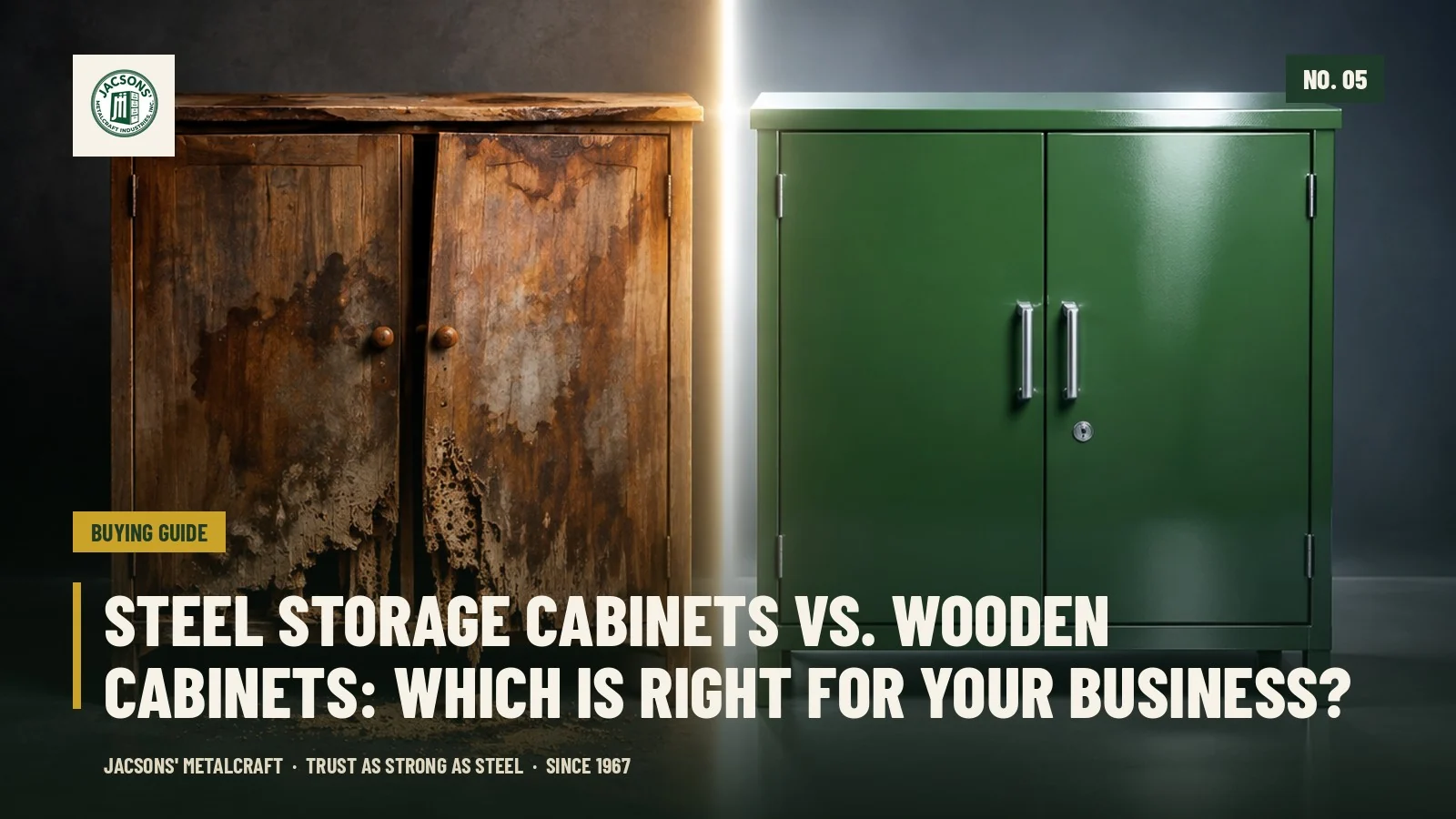
Steel versus wood is one of the oldest debates in office furniture, and the honest answer is that neither wins everywhere. The right choice depends on what you store, where the cabinet lives, and how long you expect it to serve. Here is a straightforward comparison to help Philippine businesses decide.
Durability and expected use
Steel cabinets handle abuse: heavy loads, frequent moves, and decades of daily opening and closing. A well-built steel cabinet in a records room can easily serve twenty years or more. Wooden cabinets vary enormously — solid hardwood builds can last generations, but the particleboard and MDF common in budget office furniture swells, chips, and sags within years, especially under heavy files.
For high-traffic, high-load environments — schools, government offices, warehouses — steel is the practical default. For executive offices where furniture is part of the décor, quality wood has a legitimate place.
Maintenance
Steel asks for almost nothing: wipe it down, touch up scratches before rust starts, and tighten a hinge occasionally. Wood asks for more — it scratches, stains, and needs polishing, and damaged veneer is difficult to repair invisibly. In shared, heavily used spaces, steel's low maintenance is a real operating cost advantage.
Security
For documents that must stay confidential — payroll, contracts, medical records — steel cabinets with proper keylocks are meaningfully harder to force than wooden ones. A steel storage cabinet with adjustable shelves secures supplies and records alike. If security is a primary concern, steel is the clear choice; wood cabinetry is rarely designed around forced-entry resistance.
Moisture and the Philippine environment
This is where the comparison gets decisive locally. Humidity, termites, and the occasional flood are facts of Philippine life. Steel with a quality painted finish shrugs off humidity and is immune to termites; if floodwater reaches it, you dry it off and carry on. Wood swells, warps, molds, and — especially in provincial settings — attracts termites. For non-airconditioned buildings, steel is usually the only sensible long-term option.
Appearance and workspace requirements
Wood wins on warmth. In reception areas, executive suites, and client-facing spaces, wooden furniture contributes to atmosphere in a way steel does not. Modern steel cabinets, however, are far from industrial eyesores — clean lines and color options like green, teal, and white let them blend into contemporary offices. Many businesses mix both: wood where clients sit, steel where work happens.
Initial cost versus long-term value
Budget wooden cabinets are cheaper on day one — and often more expensive by year five once replacements enter the picture. Quality hardwood costs more than steel upfront. Steel sits in a sweet spot: a moderate initial price for a service life measured in decades. When you divide cost by years of service, steel cabinets are among the cheapest storage a business can buy.
Frequently Asked Questions
Are steel cabinets always better than wooden ones?
No. Steel wins on durability, security, moisture resistance, and long-term value — but wood remains a good choice for executive and client-facing spaces where appearance matters most. Many offices sensibly use both.
Do steel cabinets look too industrial for a modern office?
Not anymore. Current steel cabinets come in clean designs and colors like green, teal, and white that sit comfortably in contemporary workspaces.
Which material handles flooding better?
Steel, by a wide margin. A flooded steel cabinet needs drying and a wipe-down; flooded wooden furniture — especially particleboard — is usually a write-off.
Ready to talk about your project?
Tell our Iloilo team what you need to store, your preferred dimensions and color, quantity, and delivery location.