
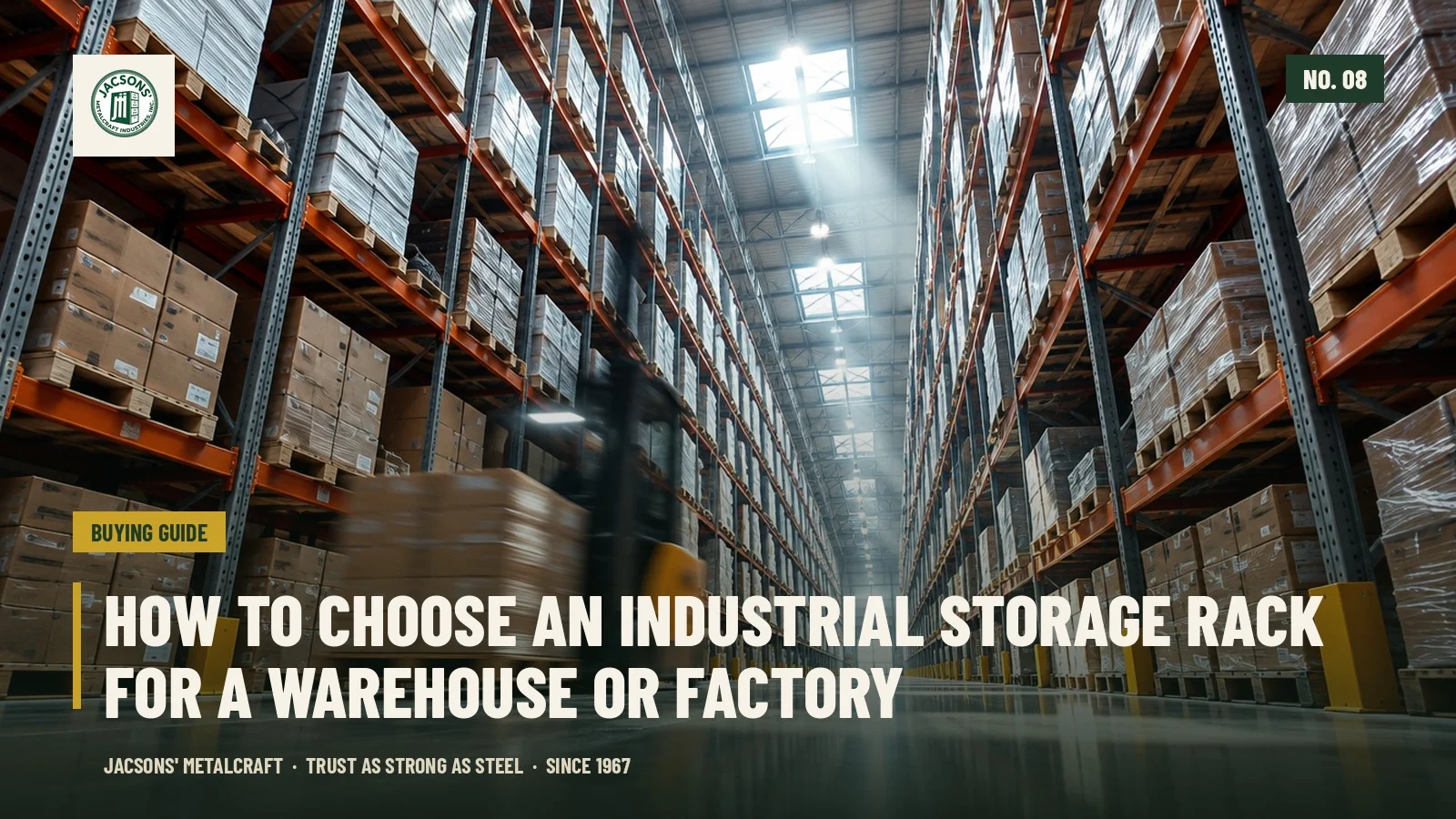
A warehouse rack is infrastructure: choose it well and it quietly organizes your operation for decades; choose it badly and you inherit sagging shelves, blocked aisles, and safety risks. Whether you are fitting out a stockroom, a factory floor, or a full warehouse, here is how to specify storage racks properly.
Start with storage requirements and available space
Measure the space first: floor area, ceiling height, column positions, and door access. Then measure what you are storing — the largest and heaviest items, not the average ones. Racks are specified around the worst case, because that is the case that bends shelves.
Vertical space is usually the cheapest storage you own. A tall multi-tier rack like a 6-tier metal rack multiplies capacity on the same footprint — provided your ceiling and your staff's reach allow it.
Number of shelves and configuration
Shelf count follows item height. Six tiers suit boxes, parts, and supplies; fewer, taller tiers suit bulky items. Adjustable shelves are worth insisting on — inventory changes, and fixed shelves lock you into today's product mix.
Plan the layout in rows with honest aisle widths. Aisles that look generous on paper shrink fast once pallets, carts, and people occupy them.
Load capacity and safety considerations
Every shelf has a load limit, and exceeding it is how racks fail. When requesting a quotation, state your heaviest intended load per shelf and ask the manufacturer to confirm the rack is built for it — never assume a capacity that was not specified. We build racks to the requirements you give us, and we would rather ask you twice about loads than deliver a rack that is wrong for the job.
Basic safety habits extend rack life: load heavier items on lower shelves, distribute weight evenly, do not climb the racks, and anchor tall units where the environment calls for it.
Access, organization, and workflow
Racks should match how goods move. Fast-moving items belong at waist-to-shoulder height near the aisle; slow movers go high or deep. Label every shelf position from day one — an unlabeled rack is a hiding place, not storage.
If staff pick items daily, prioritize open access and clear sightlines over cramming in extra tiers. The few minutes saved per pick, multiplied by hundreds of picks, is real money.
Environment and maintenance
Humid or coastal environments call for properly finished steel — a quality spray-painted finish resists rust in ordinary warehouse conditions, while stainless options suit wet or hygiene-sensitive areas. Keep racks dry at the base, touch up paint damage promptly, and inspect welds and bolts annually.
A locally manufactured rack has a practical advantage: additional shelves, replacement parts, or matching units for expansion are available years later from the same plant.
Verify specifications before installation
Before signing off, confirm in writing: overall dimensions, number of tiers, shelf adjustability, material and finish, and the load the rack is built to carry. Check the delivery path — racks are bulky — and decide who assembles and anchors the units. Fifteen minutes of verification prevents the most common rack regrets.
Frequently Asked Questions
How much weight can an industrial rack shelf hold?
It depends on how the rack is built — there is no universal number. Tell the manufacturer your heaviest intended load per shelf and have them confirm the build is rated for it before you order. Never assume a capacity that was not specified.
How many tiers should a warehouse rack have?
Match tiers to item height and staff reach. Six tiers suit boxes and parts storage under normal ceiling heights; bulky items need fewer, taller tiers. Adjustable shelves keep your options open as inventory changes.
Can racks be expanded later?
Yes — and this is a strong reason to buy from a local manufacturer. Matching additional units and spare shelves remain available, so your storage can grow in the same system instead of becoming a patchwork.
Ready to talk about your project?
Tell our Iloilo team what you need to store, your preferred dimensions and color, quantity, and delivery location.